


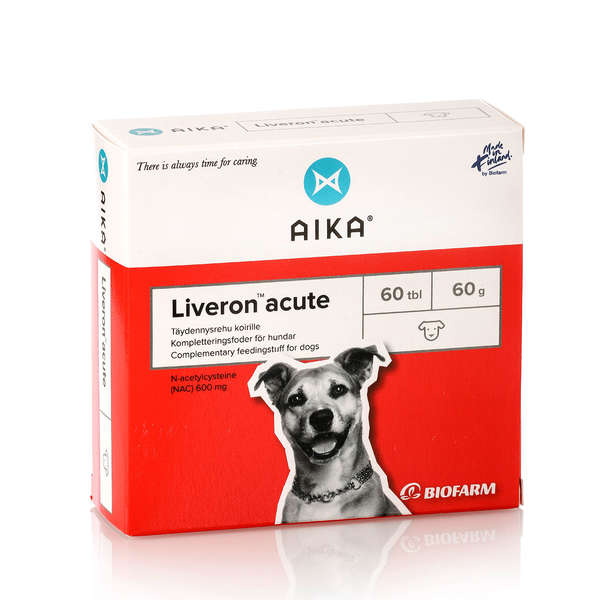
AIKA Liveron Acute – For supporting liver function in dogs, 60 tablets.
Low stock
Liveron Acute tablets are a dietary supplement designed for dogs to support liver function.
The product is suitable for use according to the veterinarian's instructions, for example in situations where the dog has acute liver dysfunction, acute pancreatitis, or sepsis.
Read moreRegular price
€19,90
Sale price
€19,90
Regular price
Unit price
per
Couldn't load pickup availability
Always follow the veterinarian's instructions.
Oral administration. Acute liver-stressing situations:
- First dose 140-280 mg NAC per kg of body weight (140mg/kg is the most commonly used dose)
- Thereafter 70 mg per kg of body weight every 6 hours at least 7 times
Can also be used in cats, but oral absorption is limited, only about 20% is absorbed.
Store at room temperature.
1 tablet contains 600 mg NAC.
N-acetylcysteine (NAC) is a derivative of a naturally occurring amino acid. It is converted into cysteine, which is needed for the synthesis of the body's own important antioxidant (glutathione). NAC supplementation can support sufficient cysteine supply for synthesis.
NAC also acts directly as an antioxidant by binding to reactive oxygen radicals and thus reducing oxidative stress. The use of NAC is justified in conditions where oxidative stress is underlying the disease, such as acute liver dysfunction, acute pancreatitis, sepsis, and severely ill dogs.
After ingestion of xylitol, animal-toxic medications (e.g. paracetamol), or plants, fruits, etc. causing poisoning, as well as after a snake bite, use as soon as possible after the event (according to the package instructions) is justified.
In acute situations requiring veterinary treatment, the use of the product should always be mentioned to the treating veterinarian.
NAC also has a proven mucolytic effect, so use in connection with, for example, kennel cough can ease the animal's condition.