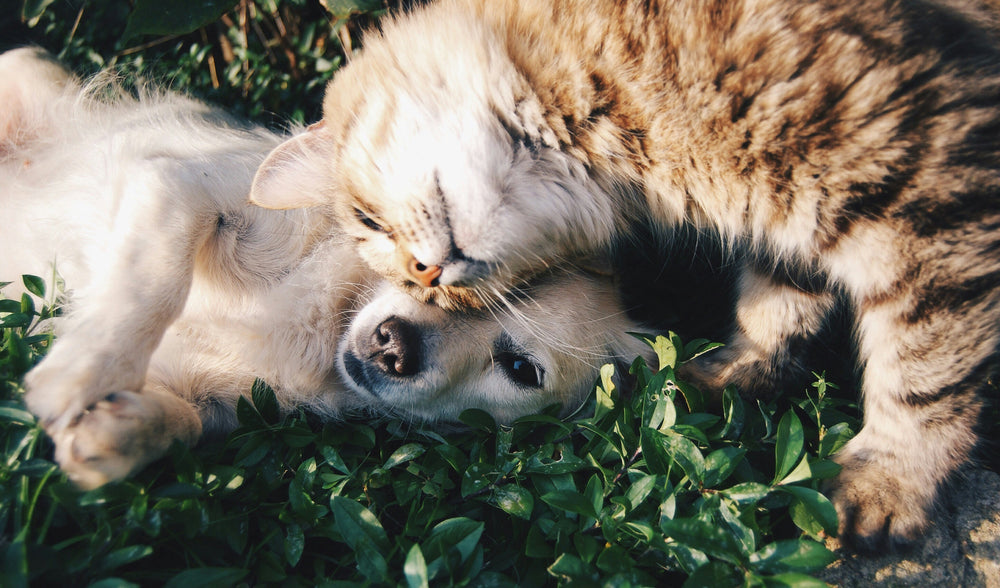


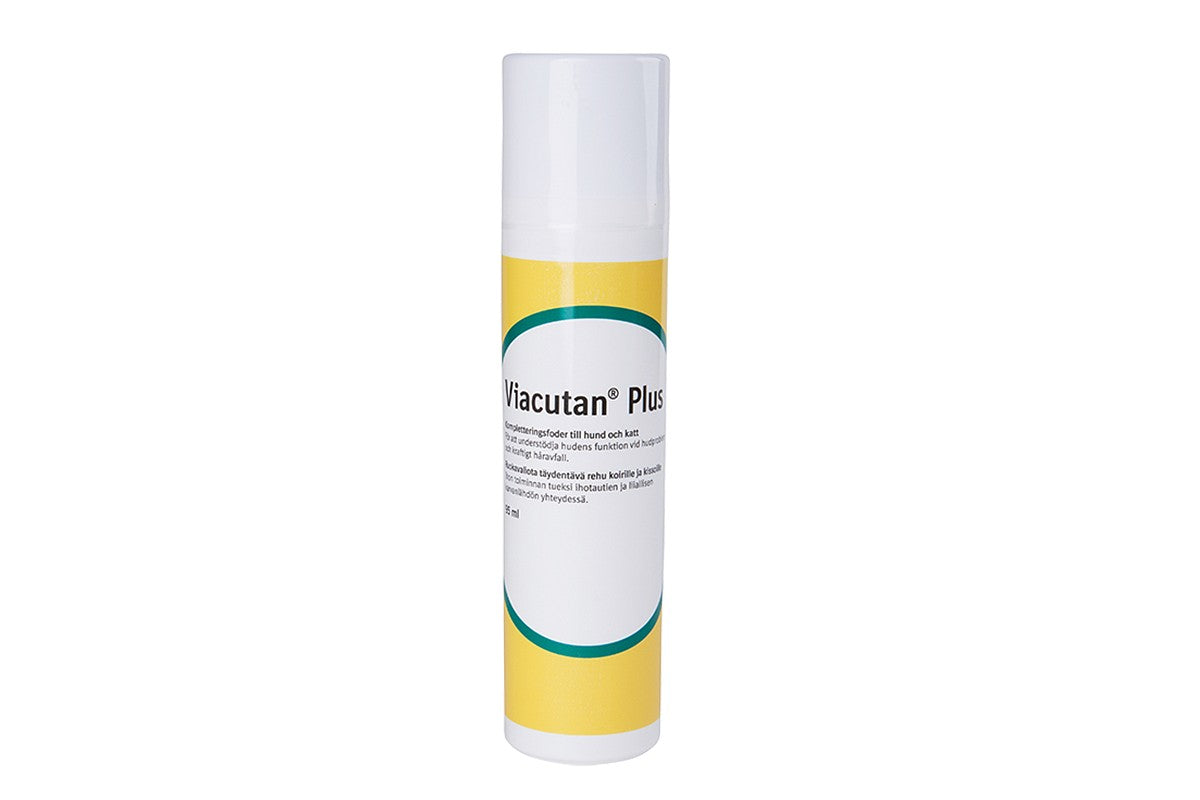
Viacutan® Plus Solution - To support skin health in dogs and cats 95 ml
Low stock
Viacutan® Plus solution supports skin function in cases of skin diseases and excessive hair loss, and is suitable for both dogs and cats.
The solution is a combination product of essential fatty acids and antioxidants that maintains the skin and coat health of dogs and cats. The product contains oil pressed from borage seeds and fish oil, as well as natural antioxidants – rosemary and turmeric extract.
The product contains essential fatty acids that the body cannot produce itself, so they must be obtained from food. The solution contains a high amount of GLA from vegetable and fish oils, as well as other essential fatty acids that promote the health of the skin and coat. In addition, it contains natural antioxidants that protect the skin from the harmful effects of free radicals.
Read moreRegular price
€35,90
Sale price
€35,90
Regular price
Unit price
€377,89
per
l
Couldn't load pickup availability
Administer orally once a day, either mixed with food or on top of it. It is recommended to use the product for at least eight weeks.
Dosage: 1-2 pumps/10 kg, once a day.
One 95 ml bottle contains approximately 158 pumps.
An opened package is stored at room temperature until the expiry date marked on it. Store upright at room temperature. Keep out of reach and sight of children and animals.
Vegetable oil, fish oil, turmeric extract, rosemary extract.
Nutrients:
- Crude fat 97 %
- Crude protein 1 %
- Ash 1 %
- Crude fibre 1 %
1 pump (0.6 ml) contains: GLA 105 mg, LA 190 mg, total EPA and DHA 21.5 mg, turmeric extract 3000 ppm, rosemary extract 1800 ppm.
Viacutan® Plus – efficacy studied in atopic dogs
A study conducted on atopic dogs compared the effects of different fatty acid combinations on atopy. Viacutan® Plus has a high GLA (gamma-linolenic acid) content, so a small single dose is sufficient. This allows the pet to receive the amount of essential fatty acids it needs while avoiding excessive fat intake, which can lead to obesity. In addition, thanks to the small single dose, the cost per dose of the product is affordable.
The study found that
- The combination of GLA (gamma-linolenic acid), EPA (eicosapentaenoic acid), and DHA (docosahexaenoic acid) is more effective than individual fatty acids at reducing the activation of immune cells in an allergic reaction 3.
- Viacutan® Plus reduces the need for itch-relieving medication in atopic dogs
- High intake of linoleic acid (LA) through food does not replace the benefits provided by an EPA, GLA, and DHA supplement.
1. Saevik B.K. et al, A randomized, controlled study to evaluate the steroid sparing effect of essential fatty acid supplementa-tion in the treatment of canine atopic dermatitis; Veterinary Dermatology, 2004, 15, 137-145. 2. Mueller R.S. et al, Effect of omega-3 fatty acids on canine atopic dermatitis; Journal of Small Animal Practice, June 2004, 45, 293-297. 3. Influence of pre-treatment with different PUFA/ PUFA combinations on proliferation of allergen challenged peripheral blood mononuclear cells from atopic dogs.